

By the morning of February 5, 1857, Return Jonathan Meigs Ward was telling a new story about his wife’s disappearance. The day before, he had told neighbors that he and Olive intended to leave town together. Now, when he appeared again at the grocery of his neighbor, Liba Allen, he gave a very different account.
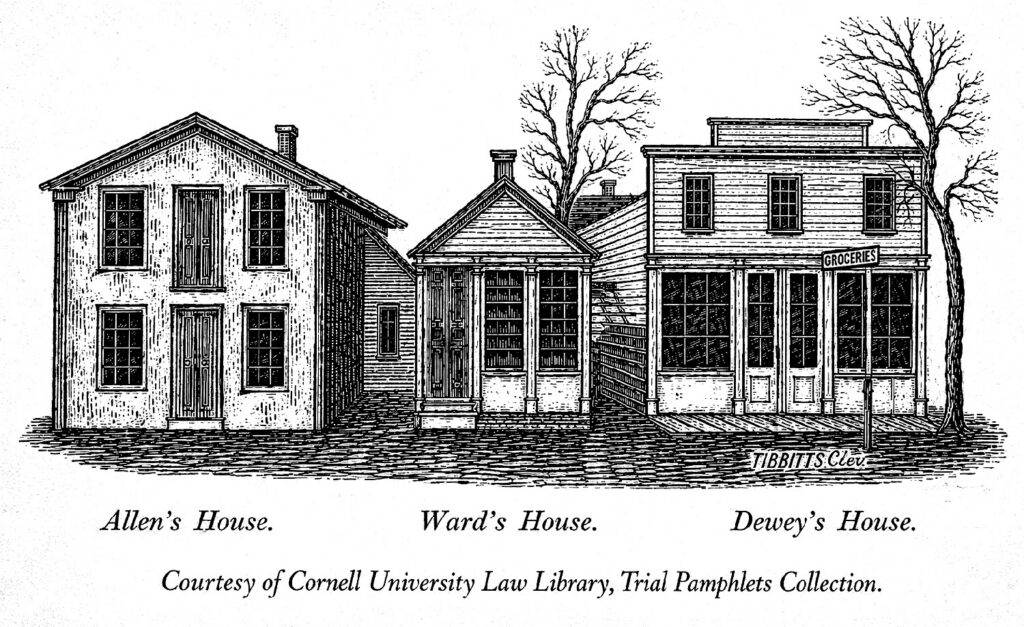
Allen later testified that Ward told him his wife had left him during the night and gone for good. According to Ward, she had boarded the train on Tuesday night, February 3, to go west and join another man who was going to take her all the way to California. Ward said he had even given her twelve dollars to help her leave and had taken her trunk to the station himself.
The story puzzled Allen. Only the day before, Ward had said they were leaving together. Now his wife had supposedly abandoned him and fled across the country with another man. Ward also seemed agitated and unsettled in a way that was unusual for him.
Allen lived next door to Ward, their buildings only a few feet apart, and over the previous two days he had already noticed strange things. There was smoke from Ward’s chimney and movement inside the house on February 4, despite Ward’s claim that he and his wife had gone, and, that evening, noises were heard that were even more troubling. His wife, Laura, had been awakened in the night by sounds like objects being moved and struck about the room. Now, hearing Ward’s latest explanation, Allen began to suspect that something was wrong, and later that morning he walked to the railroad depot to check the story.
The station watchman, Charles Edson, later testified that no trunk had been received on Tuesday night or even the following morning. He said he knew both Ward and his wife and that neither had been at the station. The baggage master, Isaac T. Bloomfield, gave similar testimony. His records showed no baggage checked from Sylvania on the train Ward had described. If a trunk had been loaded without being checked, he could not have known, but there was no official record that any baggage had been put aboard.
Allen came back from the depot convinced that Ward’s story was false. He shared his suspicions with Stephen Porter, who ran the small tavern directly across the street from Ward’s house. Porter had already noticed odd activity there. During the previous day, he had seen smoke pouring from Ward’s chimney as if a large fire were burning inside. He had also seen someone moving inside. The lower halves of the windows were covered by curtains, but above the curtain line he could occasionally see the shape of someone’s head. At one point Porter saw Ward step out the back door carrying a large metal tub and empty its contents into the yard before going back inside. The liquid, Porter later testified, looked like “bloody water.”
Even as the neighbors compared what they had seen, Ward went on destroying the evidence in the house. Porter testified that he saw Ward carrying wood shavings from a nearby wagon shop to feed the fire, and on one afternoon he watched him make the trip three times, each time bringing back a basket of large shavings. R. C. Donnell testified that he saw Ward carry armfuls of shavings several times on Thursday afternoon. The behavior stood out, since Ward normally collected shavings at night rather than in daylight.
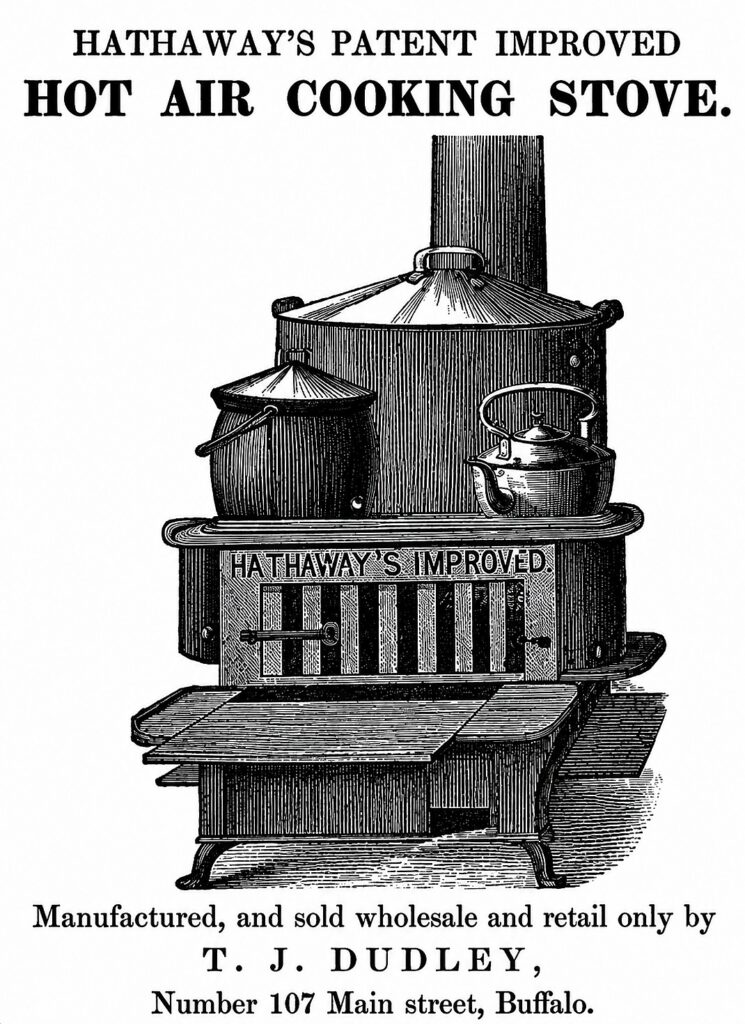
The fires made heavy smoke. Residents all over town saw the thick, dark clouds rising from Ward’s chimney, and travelers passing through Sylvania remarked on the smoke and its odor. One passerby later testified that the smell was unlike anything he had encountered. Another said it reminded him of meat cooking, only much stronger. Allen described the smoke as whitish in the center and darker on the outside, which suggested an extremely hot fire.
Meanwhile, Ward kept telling conflicting stories. William Warren, the man Ward had sent to Adrian to bring Olive back, met him at the post office on February 5. Ward called him aside and said his wife had gone again. Asked where, he said California. He repeated that she had boarded the train on Tuesday night and that he had personally helped load her trunk onto the baggage car. Warren noticed that Ward’s thumb was swollen. Ward explained that he had hurt it carrying the trunk to the station, saying the ground was slippery and he had fallen while handling the baggage. Later, when Warren asked about the trunk again, Ward slightly changed the details of the account. This time he said he had put the trunk in the baggage car himself and told the baggage master it was bound for Toledo, but admitted he had not gotten a baggage check. By then Allen had already established that no such baggage had been recorded.
Later that day Allen took Warren aside between the buildings and showed him where Ward had thrown out the water from the tub. The ground was still stained with what looked like blood. Nearby they found small chips and scraps of leather that also carried a reddish discoloration. Both men were disturbed by what they saw.
Porter kept watching the house. He testified that he saw movement inside consistent with someone scrubbing the floor, and that on another occasion he saw Ward leave and lock the door behind him, checking the lock carefully and sometimes pausing on the steps before walking away. Ward was also not working at his trade. According to Warren, Ward said he felt too unwell to do any tailoring that week, yet the fires in his house kept burning through Wednesday and Thursday.
While suspicion grew among his neighbors, Ward spent part of his nights away from the house. His niece, Mrs. Caroline Lewis, later testified that he visited her home on several evenings that week and stayed overnight on February 5 and February 6, which was out of character for him. On one of those visits he repeated a slightly new version of the story. He said his wife had gone to the State of New York, and he had gone with her as far as Toledo and seen her off on the eastern train. During these conversations he also made a remark that later stood out to his niece. Ward said he had done a deed which, if it became known, would send him to the state prison. At the time Mrs. Lewis thought he meant the abortion he had earlier spoken about, and she did not connect the remark to his wife’s disappearance.
The people of Sylvania were quietly reaching their own conclusions. Ward’s explanations contradicted each other. The depot records did not support his story. Neighbors had seen bloody water thrown from his house and large fires burning day and night. Smoke and a strange odor had drawn attention across town. He had been gathering shavings, locking the house, and changing his story, and Olive had not been seen. Many residents began to suspect that Olive Ward had never left Sylvania.
While townspeople discussed what should be done, Ward kept at his work inside the house on Division Street. He cut the body into smaller pieces and fed them into the stove, and he scattered the ashes and fragments of bone in the field behind the house, along Division Street, near the railroad bridge, and into Ten-Mile Creek. For several days, he worked this way, trying to destroy every trace of the crime and, for a short time, it may have seemed possible that he would succeed. But the neighbors’ suspicions were already taking shape and, soon, they would lead to the ash pile behind his house.
PREVIOUS >>> The Murder of Olive Ward
NEXT >>> Ward Confronted

Ward: The Life and Crimes of Ohio’s First Serial Killer, Copyright (c) 2026 Christopher Tillman
All Rights Reserved
No part of this book may be reproduced in any form or by any means without the express written consent of the author and publisher.
All graphics in this book are either images of existing documents, enhanced using A.I. for clarity and readability, or artistic renderings and interpretations of events described in the text.
