

The final collapse of the marriage between Return Jonathan Meigs Ward and Olive Davis Ward came in the first days of February 1857, inside the small house on Division Street in Sylvania, Ohio.
By then the marriage was beyond repair. Olive had returned from Adrian only to recover the belongings she had been unable to take when she first fled her husband, and she had made no secret of her intention to leave him again. On the evening of February 3 she visited Mrs. Harriet Nathans, bought a dozen eggs, and said plainly that she expected to leave soon. Later that night, Ward and Olive argued once more over her determination to go.
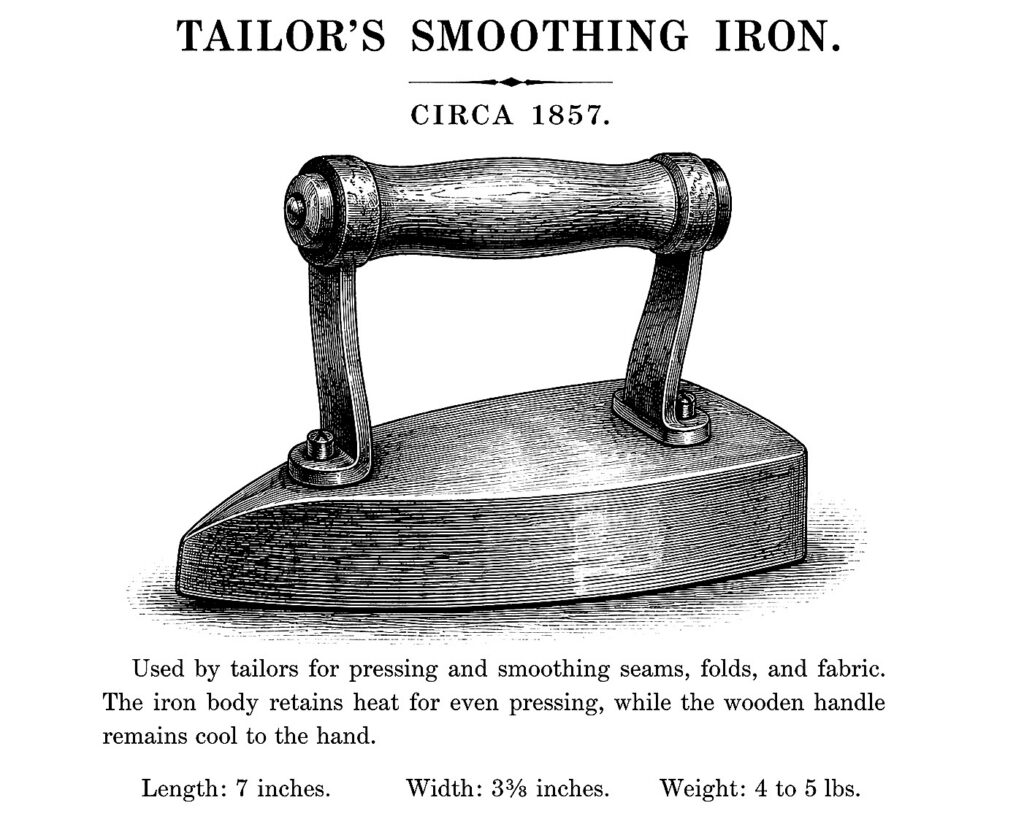
What happened the following morning was later described by Ward himself. According to accounts derived from his confession, the subject of Olive’s departure came up again on the morning of February 4, 1857. As Olive bent down to put on her shoes, Ward seized a smoothing iron and struck her once on the side of the head. The blow was fatal. Ward later indicated that she made little or no sound. He stood by as she bled out and slowly died, and by his own account it took several minutes before life left her body. He then wrapped her body in blankets and hid it under the bed inside the house.
The killing has often been interpreted as a crime of passion, a violent response to rejection. It is possible that Ward had not fully planned the murder and that the attack grew out of the argument carried over from the night before. As in other violent episodes in his life, his first act may have been more impulsive than calculated. The record does not settle the question. What it does show is that once Olive was dead, Ward moved quickly to conceal what he had done.
That same morning he went next door to the little grocery store of his neighbor, Liba Allen. Allen later testified that Ward bought a pound of sugar and told him that he and his wife were going away that day and would be gone overnight. (In some accounts, Ward said they would be gone a day or two.) He asked Allen to tell anyone who came to the tailor shop looking for him that he was away.
At the time Allen thought little of it, but not long afterward he began to notice details that made the story hard to believe. Around ten o’clock that morning Allen was across the street at Porter’s tavern, opposite Ward’s house, and mentioned to Stephen Porter what Ward had told him. Porter noted that someone must still be at home since smoke was plainly rising from the chimney. The two men looked toward the house and saw movement inside. Allen later testified that he saw a head above the window curtain. The curtains were drawn low, but someone was clearly in the building. Curious, Allen walked past the house more than once and heard sounds from within. He heard movement, objects being shifted. They were the sounds of a person apparently at work. If Ward and his wife had really left town, the house should have been empty.
Inside, Ward had begun the work of concealment. Later evidence would show that between February 4 and February 8 he cut up Olive’s body and burned the remains in the stove and fireplace. Fragments of bone and ash were eventually scattered in nearby fields, and some were thrown into Ten-Mile Creek. Blood was later found on the bed tick, the bolster, the headboard, the wall, the stairway to the garret, on a mat upstairs, and inside the shed. The wood box near the wall even held large quantities of coagulated blood. On that first day, though, none of this had been discovered. All the neighbors could see was smoke, movement, and a man who had already started changing his story.
By late afternoon and evening, Ward was giving a different explanation for his wife’s absence. Around six o’clock on the evening of February 4, he stopped briefly at the home of his niece, Mrs. Caroline Lewis, and told her that his wife had gone to the State of New York. It was not the last version of the story he would tell.
As the day ended and darkness fell, the noises from the house continued. Laura Allen, wife of Liba Allen, later testified that between nine and ten o’clock she heard considerable noise from Ward’s house, unlike anything she had heard there before, like things being moved or knocked about. Later reports placed more sounds around eleven o’clock and again around one in the morning. One newspaper account described the sounds as resembling “someone chopping up meat with an axe.” Only after the remains were discovered did the description take on its full meaning.
For the next several days Ward stayed mostly inside the house. He cut up Olive’s body, fed portions of it into the stove, and tried to clean away the blood as best he could. The work took days. Witnesses later described him drawing heavily on nearby shops for wood shavings to keep the fires going, and ashes and fragments were carried out and disposed of beyond the house. To those passing by, only the smoke and the smell of burning meat suggested anything was wrong.
But, in a small community like Sylvania, inconsistency could itself become evidence. Within a short time, neighbors had heard two different versions of Olive’s disappearance. In one, Ward said that he and his wife were both leaving town. In the other, he said she had gone to New York. Inside the house on Division Street, however, Olive Ward had never left at all.
PREVIOUS >>> The Return to Sylvania
NEXT >>> The Suspicion Grows

Ward: The Life and Crimes of Ohio’s First Serial Killer, Copyright (c) 2026 Christopher Tillman
All Rights Reserved
No part of this book may be reproduced in any form or by any means without the express written consent of the author and publisher.
All graphics in this book are either images of existing documents, enhanced using A.I. for clarity and readability, or artistic renderings and interpretations of events described in the text.
